Here is an easy trick to drive yourself crazy: Just go for a ride while your disc brakes are rubbing. Brake rub is one of the most irritating noises a bike can make, but there’s no reason to live with it, because it’s so easy to fix! Here’s what you need to know.
Editor’s note (2026):
This guide has been updated to better answer the most common disc brake rubbing questions riders ask, including rubbing after new pads, hydraulic disc brake rub, and rotor rub on one side.
Contents:
- How to fix disc brake rub
- How to align brake calipers
- How to true brake rotors
- Other brake rub causes
- Why Are My Disc Brakes Rubbing After New Pads or a New Rotor?
- Disc Brake Rubbing on One Side?
- FAQ
How to fix disc brake rub
There are two main reasons your disc brakes might be rubbing. Either the brake caliper is not aligned correctly, or the brake rotor isn’t straight. Or, you could have both problems.
First, put your bike in a bike stand (or have a patient friend hold it) so you can spin the wheels freely.
[button]Bike Stands[/button]
Identify the cause of brake rub — either caliper misalignment or a bent rotor — by spinning the affected wheel and listening to the rubbing noise. If the brake rub is constant, address caliper alignment first. If the brake rub is more intermittent and rhythmic, your brake rotor is bent, and that noisy spot is where it’s rubbing the pads. Your rotor will need to be trued.
Note: Watch your fingers! Don’t get so focused on the brakes that you get a finger caught in the spokes or rotor while the wheel is spinning. I say this from experience ...
Quick answer:
If your bike disc brakes are rubbing, the most common cause is either a misaligned brake caliper or a slightly bent rotor. On hydraulic brakes, rubbing can also happen if the brake pistons are too far advanced, especially after removing a wheel or installing new rotors.
[button]Shop Bike Tools[/button]
How to align brake calipers
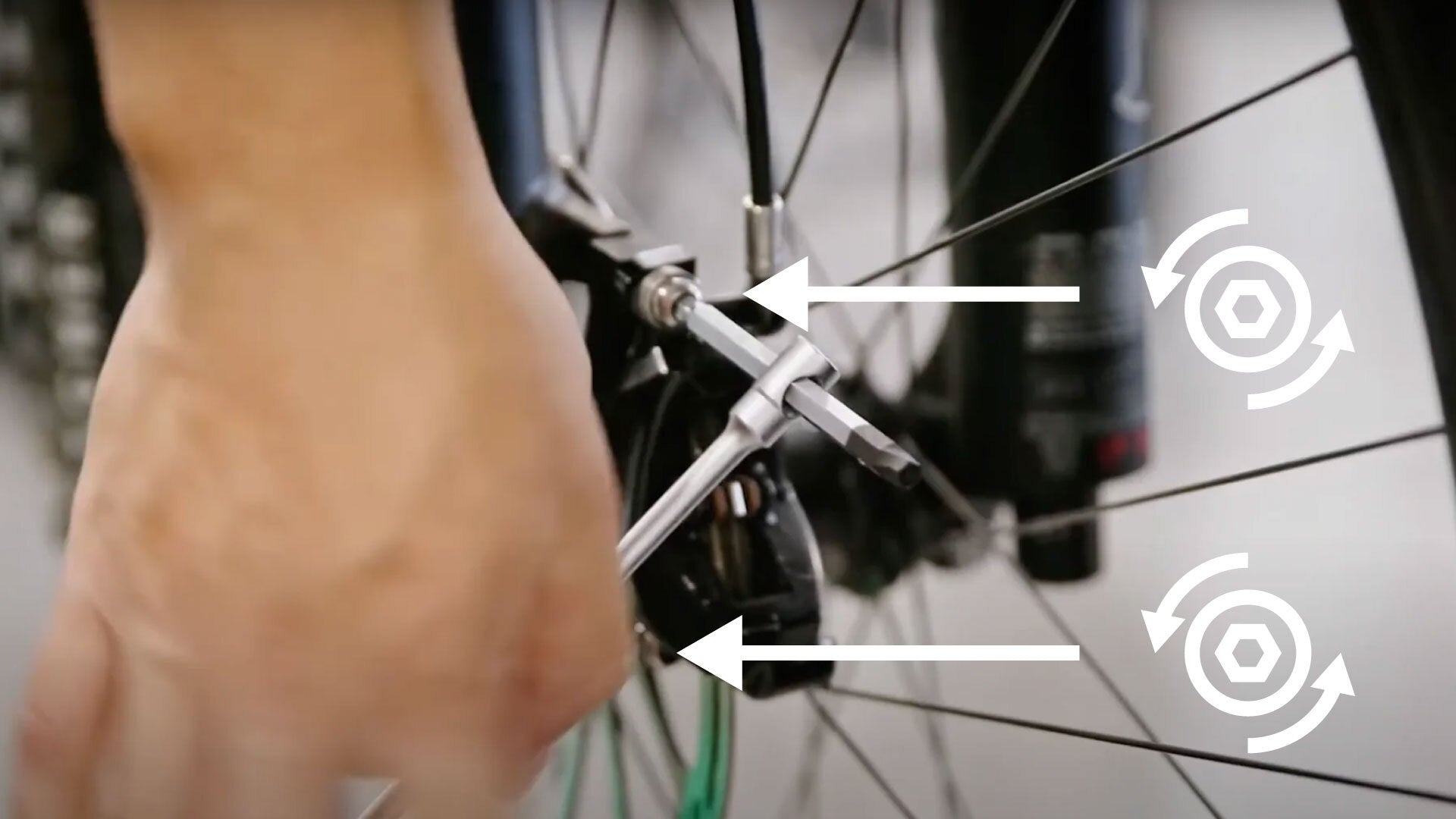 To align your brake caliper, you’ll need to loosen the bolts that mount the caliper to the frame; 5mm hex bolts are common on mountain bike calipers and older post-mount road and gravel calipers. T25 Torx bolts are typical on newer flat-mount road and gravel calipers
[product-block handle="park-tool-tws-3-torx-compatible-3-way-wrench"/]
Loosen the bolts that hold the caliper to the frame just enough to allow the caliper to wiggle side-to-side. To align the caliper, squeeze or pump the brake lever. The brake pads compressing will center the caliper over the rotor. Then, hold the brake lever in while you retighten the bolts to keep the caliper positioned.
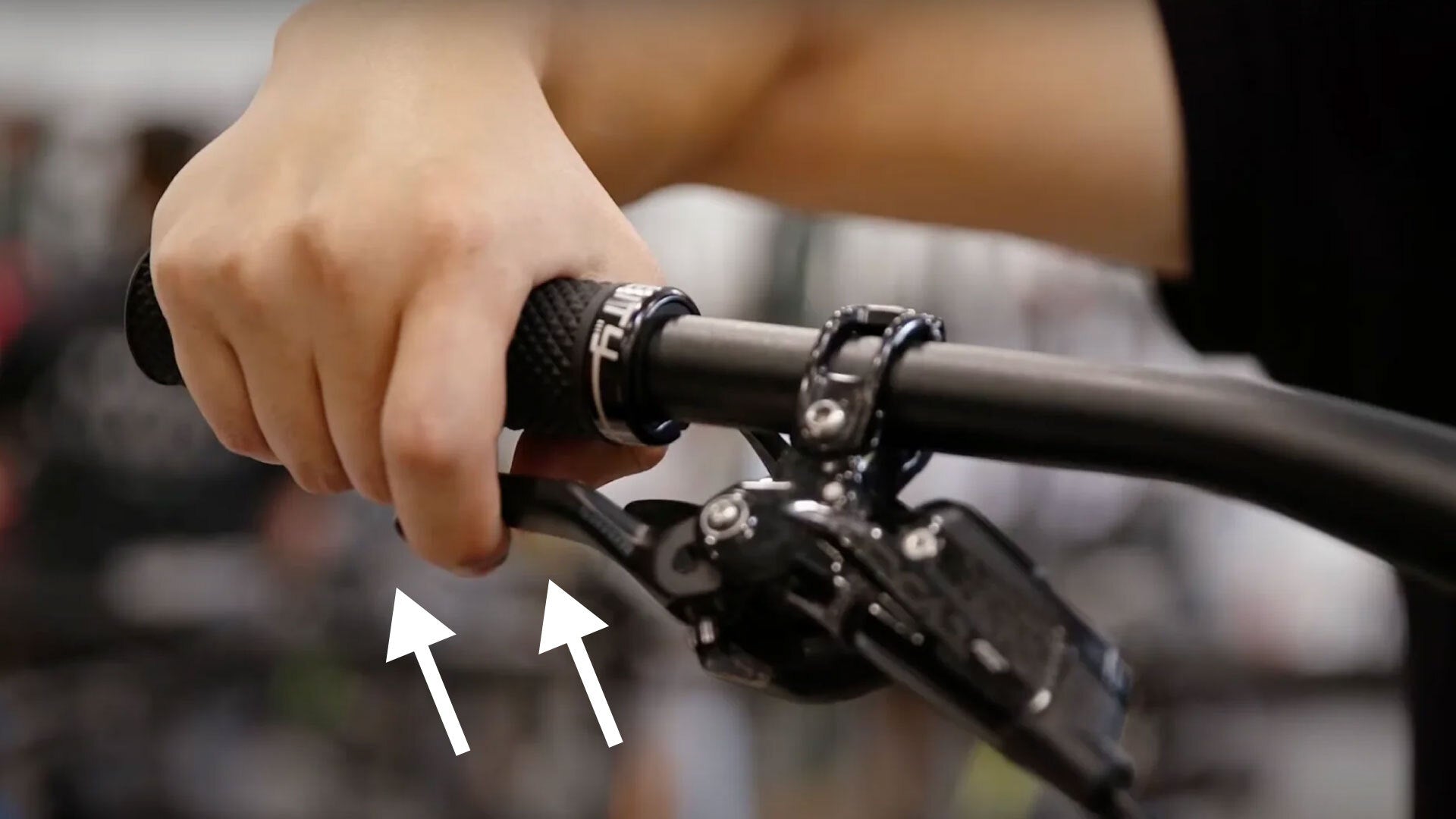 When retightening the bolts, make sure to alternate between them, tightening each a little at a time. If you crank one bolt all the way down before tightening the other, you may shift the caliper out of position.
If the caliper isn’t fully aligned after this, you can repeat the process, or make small adjustments by looking directly through the brake caliper and eyeballing it. Use a flashlight or hold up a piece of white paper behind the caliper to see the rotor’s position between the brake pads. Loosen the mounting bolts and nudge the caliper until it’s aligned and the brake rub goes away.
[button]Shop All Tools[/button]
How to true brake rotors
Disc brake rotors can get bent from crashes, leaning your bike against things, or extreme heat during hard use. Sometimes, even new rotors need to be trued out of the box.
The pro mechanics at The Pro’s Closet like to use a dedicated brake rotor truing tool, but you can also use an adjustable crescent wrench or Knipex pliers. Just make sure the jaws are clean so you don’t contaminate your rotors with oil or grease.
Park Tool DT-2C Rotor Truing Fork - $17.95
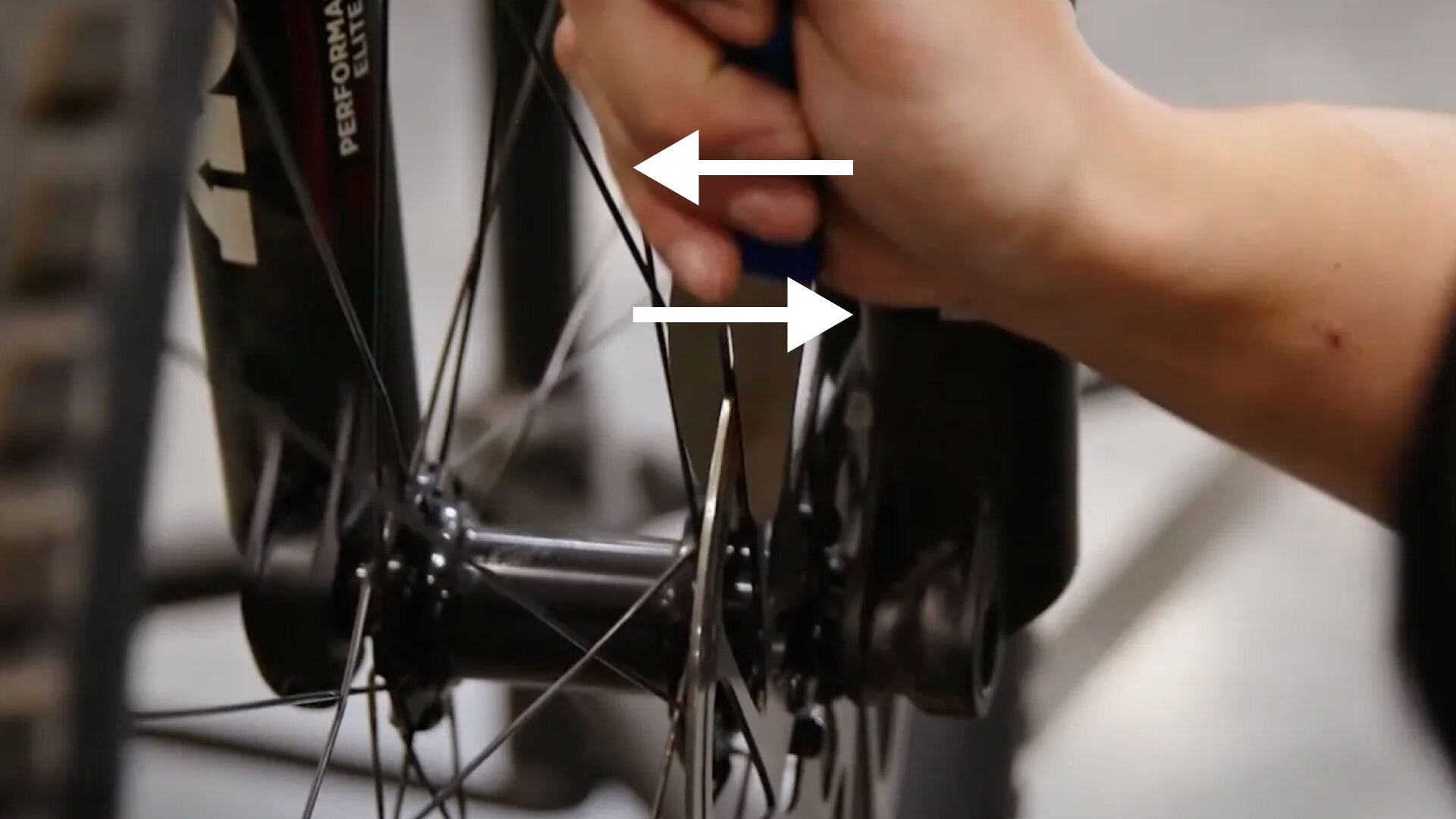 Slowly spin the wheel and note the spots where the rotor is rubbing. Identify which brake pad is touching the rotor. Bend the rotor in the opposite direction, away from the rubbing side.
Slot the truing tool over the rotor and use light pressure to flex the rotor and bend it straight. Be gentle at first and go slow. Repeat as necessary until the rotor no longer rubs the brake pads. If your rotor is really bent, say from a crash or impact, it may be impossible to get perfectly straight and you should consider replacement.
[button]Shop All Tools[/button]
Other brake rub causes
If you accidentally squeezed a brake lever while the wheel was removed, or recently installed new rotors, your brake pistons may be too far advanced. You’ll need to push the pistons back into your brake caliper to eliminate brake rub.
There are dedicated tools for pressing brake pistons, but a tire lever will work in a pinch. Again, be sure whatever tool you use is clean to avoid contaminating your brake pads.
Why Are My Disc Brakes Rubbing After New Pads or a New Rotor?
If your disc brakes are rubbing after new pads or after installing a new rotor, the pistons may be sitting too far forward in the caliper. This is especially common with hydraulic disc brakes. The fix is usually to remove the wheel and carefully push the pistons back into the caliper, then reinstall the wheel and pump the brake lever to reset the system. You may need to realign the caliper afterward.
Park Tool PP-1.2 Hydraulic Piston Press - $19.95
Remove your wheel and wedge the piston press between your brake pads. Use the press as a lever to spread the pads and push the pistons all the way back into the caliper. Reinstall the wheel and pump the brake lever until the pads contact the rotor. This resets the brake pad position. You may need to realign your caliper afterwards.
Disc Brake Rubbing on One Side?
If your rotor is rubbing on just one side, the brake caliper is often slightly off-center. Loosen the caliper bolts just enough for the caliper to move, squeeze the brake lever to center it over the rotor, and then retighten the bolts evenly. If it still rubs, use a flashlight or white paper behind the caliper so you can see the gap more clearly and make small manual adjustments.
FAQ
Why are my bike disc brakes rubbing?
The two most common causes are a misaligned brake caliper or a bent brake rotor. Hydraulic brakes can also rub if the pistons are too far advanced.
How do I fix rubbing disc brakes?
Start by checking whether the rub is constant or intermittent. Constant rub usually points to caliper alignment, while intermittent rub usually means the rotor needs truing.
Why are my hydraulic disc brakes rubbing?
Hydraulic disc brakes can rub when the caliper is misaligned, the rotor is bent, or the pistons have moved too far outward after wheel removal or rotor installation.
Why are my brakes rubbing after new pads?
New pads can make brake rub more noticeable if the pistons need to be pushed back and reset. After resetting the pistons, you may also need to realign the caliper.
What if the disc brake rubs only once per wheel rotation?
That usually means the rotor is slightly bent and needs to be trued.
[newsletter]
Hopefully, this helps you silence brake rub on your bike. Brakes can be finicky, so if you have any special tips or tricks for getting rid of brake rub that I haven’t covered, let me know in the comments!
We meticulously (and independently) pick every product, and if you purchase through our links we may earn a commission.