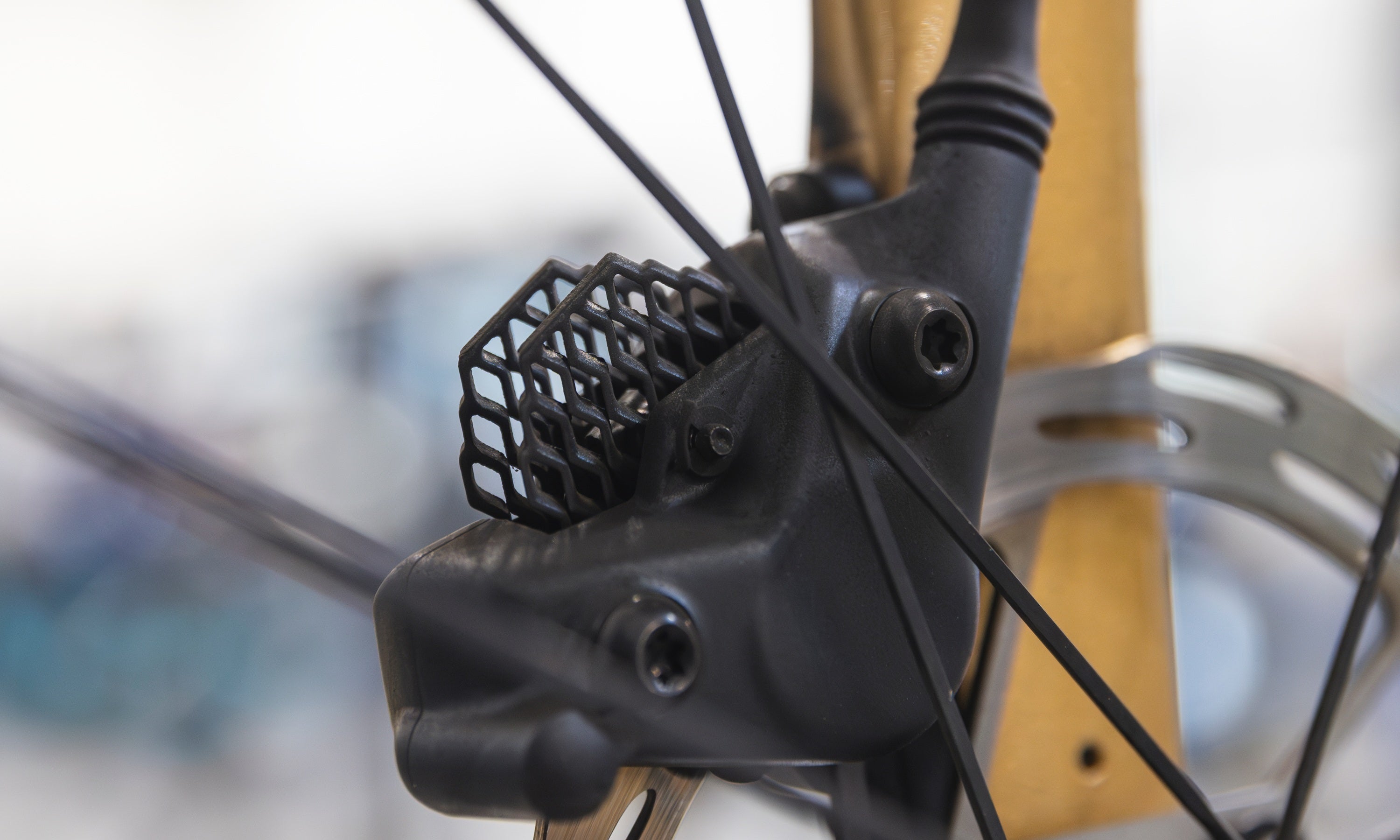
Electronic drivetrains are the future of cycling, and for the last two years, SRAM’s wireless Red eTap AXS and Force eTap AXS groups have been at the top of the food chain. The effortless shifts, easy installation, user-friendly customization, and clean, cable-free cockpits have made them a must-have for high-end road and gravel bikes.
 Now, a more affordable little brother has joined the AXS family. Meet Rival eTap AXS. With Rival, more riders can upgrade their ride with a fully wireless design, X-Range gearing, and an integrated Quarq power meter. If you’ve been itching to ride AXS technology, Rival eTap AXS might be the group you’ve been waiting for.
2026 update: SRAM Rival, Force, and Red AXS have evolved since Rival eTap AXS first launched in 2021. If you are comparing SRAM Rival vs Force vs Red today, pay close attention to the generation. Older Rival eTap AXS, Force eTap AXS, and Red eTap AXS components still show up on used bikes, while newer Rival AXS and Force AXS parts bring updated ergonomics, braking, crank designs, and lower claimed weights.
Quick answer: SRAM Rival AXS is the value option, Force AXS is the lighter performance upgrade, and Red AXS is the lightest premium group. The biggest weight differences usually come from the crankset, cassette, brake/shift levers, and small hardware choices. If you are trying to save weight on a Rival-equipped bike, the crankset and cassette are usually the first places to look.
Contents:
- SRAM Rival vs Force vs Red Quick Comparison
- Current SRAM Rival vs Force vs Red AXS Weight Comparison
- Original Rival vs Force vs Red Weight Comparison
- SRAM Rival Crankset Weight
- SRAM Rival vs Force Weight
- SRAM Force vs Red Weight
- Rival eTap AXS Key Features
- Rival eTap AXS Pricing
- Rival eTap AXS Shifters and Brakes
- Rival eTap AXS Cranksets
- Rival eTap AXS Quarq Power Meter
- Rival eTap AXS Derailleurs
- Rival eTap AXS Cassette and Chain
- Rival eTap AXS vs Force eTap AXS vs Red eTap AXS
- Should You Upgrade from SRAM Rival to Force or Red?
- SRAM Rival vs Force vs Red FAQ
SRAM Rival vs Force vs Red Quick Comparison
| Groupset | Best For | Main Advantage | Main Tradeoff |
|---|---|---|---|
| SRAM Rival AXS | Riders who want wireless electronic shifting for less money | Best value, AXS compatibility, dependable shifting, affordable power meter option | Heavier aluminum crank arms, heavier cassette, fewer premium features |
| SRAM Force AXS | Performance riders who want lower weight without Red pricing | Carbon crank arms, lighter parts, premium feel, strong upgrade value | Still heavier than Red and more expensive than Rival |
| SRAM Red AXS | Racers, weight weenies, and riders who want SRAM’s lightest road group | Lightest materials, best finish, premium ergonomics and details | Highest price |
Current SRAM Rival vs Force vs Red AXS Weight Comparison
SRAM has updated its AXS road groups since this original Rival eTap AXS review was published. Current claimed weights are not directly apples-to-apples with the original 2021 table because SRAM’s newer weights include different configurations, power meters, rotors, hardware, or other setup details depending on the group.
For 2026 shoppers, the big takeaway is simple: Rival is still the value group, Force is the lighter performance group, and Red is SRAM’s lightest premium road group.
| Current AXS Group | Claimed Weight | SRAM Configuration | Best Use |
|---|---|---|---|
| SRAM Rival AXS | 2,993g | 2x with power meter, 48/35 chainrings, 10-30 cassette | Best value wireless AXS road/gravel setup |
| SRAM Force AXS | 2,776g | 2x Thread Mount power meter, 48/35 chainrings, 10-30 cassette | Best balance of lower weight, premium feel, and upgrade value |
| SRAM Red AXS | 2,496g | 48/35 power meter crank, 172.5mm arms, 10-28 cassette, 160mm rotors, hardware, brake fluid, and batteries | Lightest premium SRAM road group |
Note: The current claimed weights above are useful for understanding the SRAM AXS hierarchy, but they should not be compared gram-for-gram to the original no-power-meter table below because the included parts and configurations differ.
SRAM Rival vs Force vs Red Weight Comparison
If you are searching for SRAM Rival weight, SRAM Force vs Rival weight, or SRAM Red vs Force weight, the most important thing to know is that weights vary by generation, crank length, cassette size, chain length, power meter setup, bottom bracket, rotors, batteries, and included hardware.
In the original Rival eTap AXS comparison below, Rival was the heaviest group, Force sat in the middle, and Red was the lightest. That hierarchy is still true. Rival uses more aluminum and simpler construction to hit a lower price. Force uses lighter carbon crank arms and more premium materials. Red uses SRAM’s lightest construction across the group.
Important: Do not directly compare older no-power-meter group weights to newer power-meter group weights. For example, SRAM lists newer Rival AXS at 2,993g for a 2x setup with power meter, 48/35 chainrings, and a 10-30 cassette. Older claimed weights in this article use a different no-power-meter configuration.
SRAM Rival Crankset Weight
The original SRAM Rival eTap AXS 2x crankset listed in this comparison weighed 844g with 48/35t chainrings and 175mm crank arms. That made it heavier than the comparable Force crankset and much heavier than Red, mostly because Rival uses aluminum crank arms while Force and Red use carbon.
For riders trying to reduce weight on a Rival-equipped bike, the crankset is one of the most noticeable upgrade areas. Rival uses aluminum arms, Force uses carbon crank arms, and Red uses SRAM’s lightest crank construction. Rival 2x cranksets also use an integrated spider, while Force and Red have different crank and chainring construction depending on generation.
That does not mean the Rival crankset is bad. In fact, it is one of the reasons Rival AXS is such a strong value. It is durable, affordable, and works well. But if your goal is to make a Rival AXS bike lighter, upgrading to a Force or Red crankset can save meaningful weight compared to swapping small parts like bottle cages or bolts.
SRAM Rival vs Force Weight
SRAM Rival vs Force weight is one of the most common comparisons because these groups are close in performance but separated by materials, finish, and price. In the original 2x AXS comparison below, Rival weighed 2,783g while Force weighed 2,600g, making Force 183g lighter in that specific configuration.
The biggest differences are in the crankset, shift/brake levers, cassette construction, and small hardware. Rival is the better value choice. Force is the better upgrade choice if you care about lower weight, nicer finish, and more premium features.
For many riders, Rival AXS will shift and brake well enough that the extra money for Force is mostly about weight, feel, aesthetics, and upgrade pride. For racers or riders building a lighter road or gravel bike, Force is easier to justify.
SRAM Force vs Red Weight
SRAM Force vs Red weight is a tougher call. Red is lighter, flashier, and uses SRAM’s most premium construction, but Force delivers much of the same electronic shifting performance for far less money.
In the original comparison below, Force weighed 2,600g and Red weighed 2,242g, making Red 358g lighter in that configuration. Much of that difference comes from the crankset, shift/brake levers, cassette construction, and chain.
If you are chasing the lightest possible build, Red is the answer. If you want most of the performance without the full Red price tag, Force is the sweet spot. For most riders, Force is the practical high-performance upgrade.
Rival eTap AXS key features:
- Proven AXS technology at a more affordable price.
- Fully wireless design with no cables, housing, or wires to manage.
- A new $249 spindle-based Quarq power meter.
- “Wide” crankset and front derailleur options for gravel bikes.
- X-Range gearing compatible with 10-36t cassette.
- Compatible with all other AXS components.
- AXS app allows users to customize shift options.
Rival eTap AXS pricing:
- Complete group (includes batteries, charger, brake rotors, and bottom bracket)
- 2x with power meter - $1,640
- 2x no power meter - $1,420
- 1x with power meter - $1,409
- 1x no power meter - $1,190
- Individual components
- Shifter and hydraulic disc brake - $200
- Crankset - $130
- Quarq power meter crankset - $349
- Power meter upgrade (spindle only) - $249
- Front derailleur (battery not included) - $175
- Rear derailleur (battery not included) - $370
- Cassette - $125
- Chain - $30
Rival eTap AXS shifters and brakes
 Rival AXS shifters have a new, revised shape, designed to fit hands of all sizes and provide powerful braking from both the hoods and drops. The hoods and shifter paddles feature a new ribbed texture for more comfort, grip, and control. The brake levers are aluminum, and the lever reach is adjustable so you can personalize your fit. Rival is only available with hydraulic disc brakes.
Rival AXS shifters pair with any other component in the AXS line-up, including Eagle AXS rear derailleurs, for riders interested in a wide-range “mullet” set-up — a 10-50T cassette with a single chainring. As with all products in the AXS ecosystem, the AXS app allows riders to adjust shifting modes, personalize their controls, and gain insight into how they use their drivetrains.
Rival eTap AXS cranksets
 The Rival crankset uses polished aluminum arms that are stiff, tough, and come in a variety of lengths (160mm-175mm). Double cranksets use X-Range gearing, with a smaller 13-tooth gap between chainrings, and are available in 48/35t or 46/33t.
Gravel and adventure riders might prefer the Rival 43/30t wide crankset, with its lower gearing and wider stance (150.5mm q-factor vs. 145.5mm) to match gravel bike chainlines and clear tires up to 700x45c or 27.5x2.1”. The wide crank requires a matching wide front derailleur.
If you want to ditch the front derailleur altogether or fit even wider tires, there is also a single-ring Rival 1 wide crankset. It uses SRAM’s narrow-wide direct-mount X-SYNC chainrings that provide chain retention in rough terrain. Direct-mount chainrings are available in 38t through 46t in two-tooth increments.
Read more about the difference between 2x and 1x drivetrains on gravel bikes.
Wide cranksets use a longer DUB spindle that will fit either road and mountain bike bottom brackets for maximum frame compatibility. They are compatible with 135mm, 142mm, and 148mm Boost rear axle spacing.
Rival eTap AXS Quarq power meter
 Perhaps the most enticing feature of the Rival AXS group is the new, more affordable, spindle-based Quarq power meter. Quarq’s crank-based power meters have become legendary for their accuracy and reliability. With Rival eTap AXS, the power meter is now entirely contained within the DUB spindle, adding only 40 grams to a complete crankset. The spindle-based unit measures left side power and doubles it to calculate total watts.
Complete Rival power meter cranksets comes in standard and Wide versions. The power meter spindle can also be purchased alone, to instantly upgrade any DUB road or road wide crankset. The power meter has a long, 400+ hour battery life and uses a replaceable lithium AAA battery.
Rival eTap AXS derailleurs
 Rival AXS derailleurs feature the same shifting precision and reliability as their Force and Red AXS siblings. The Rival AXS front derailleur is optimized for X-Range chainrings and uses Yaw technology, so there’s no need for trim to compensate for extreme gear combinations. The Rival AXS wide front derailleur is designed for smaller 43/30t X-Range chainrings on wide cranks and provides clearance for 700x45c and 27.5x2.1” tires.
The Rival AXS rear derailleur uses a spring clutch that improves chain retention over rough surfaces and keeps the drivetrain quiet and free of chain slap. It can be used with 1x or 2x drivetrains and is compatible with all X-Range cassette options fitting up to a 36-tooth cog.
Rival eTap AXS cassette and chain
 Rival takes advantage of X-Range gearing, which uses tighter jumps between the chainrings and 12-speed cassettes to give riders more gear range and smoother gear progression. It uses a nickel-chrome plated cassette with full pin construction for durability and light weight. It requires a hub with an XDR driver body and is available in 10-30t and 10-36t configurations.
To pair with the Rival AXS 12-speed chainrings and cassettes, there is a matching Rival AXS Flattop chain. The Flattop design allows for a narrower chain without compromising strength or durability. It is compatible with 1x and 2x eTap AXS drivetrains.
Rival eTap AXS vs. Force eTap AXS vs. Red eTap AXS
 Rival AXS provides a more affordable alternative to the Force eTap AXS group and the top-of-the-line Red eTap AXS group. So what compromises are made to bring down the cost?
Rival eTap AXS weight
To reduce costs, there is a slight weight penalty. With 48/35t chainrings, 175mm cranks, a 10-30t cassette, and hydraulic disc brake calipers, the claimed weight of a complete Rival eTap AXS group is 2,783 grams. A Force eTap AXS group with a similar set-up weighs 2,600 grams, a difference of 183 grams. The difference to Red eTap AXS is 541 grams. The weight differences come down to materials and construction.
The two most obvious material differences are found in the brake levers and crank arms. Rival uses aluminum brake levers and crank arms, while Force uses composite brake levers and solid carbon crank arms. Red uses carbon brake levers and hollow carbon crank arms. With the same chainrings, the aluminum Rival crankset weighs 100 grams more than the carbon Force crankset. There are similar, less visible material choices other components. The Rival rear derailleur, for example, has steel bearings, steel hardware, and an aluminum pulley cage.
Rival cassettes feature a different construction. Red cassettes are machined out of a single block of steel to minimize weight. Force cassettes use a “mini cluster” hybrid design, where the four small cogs are machined out of a single block of steel, and then eight additional cogs are individually pinned together to form the cassette. The Rival cassette uses a fully pinned design, where 12 individual cogs are pinned together, increasing the weight by about 20 grams over a comparable Force cassette. Rival and Force chains also use solid pins while Red uses lighter, hollow pins.
Weight comparison table:
|
Rival eTap AXS |
Force eTap AXS |
Red eTap AXS |
|
|
Price (2x, disc, no power meter) |
$1,420 |
$2,000 |
$2,500 |
|
Complete weight (no bb or rotors) |
2,783g |
2,600g |
2,242g |
|
Shifters and brakes |
845g |
822g |
749g |
|
Crankset (48/35t, 175mm cranks) |
844g |
744g |
561g |
|
Front derailleur |
180g |
176g |
167g |
|
Rear derailleur |
366g |
326g |
299g |
|
Cassette |
282g (10-30t) |
266g (10-28t) |
211g (10-28t) |
|
Chain |
266g |
266g |
255g |
Rival eTap AXS design differences
Rival eTap AXS 2x cranksets use an integrated spider, while Rival 1x cranksets have a single direct mount chainring. You will not be able to swap between 2x and 1x set-ups like you can with the Force and Red cranksets.
The hood shape for the Rival eTap AXS shifter has changed to a narrower grip than Force or Red. This narrower grip is possible because Rival eTap AXS doesn’t have contact point adjustment for the brakes, and also does not allow for blips (auxiliary remote shift buttons). Force can add one blip per shifter and Red two blips per shifter.
The Rival AXS rear derailleur uses a spring clutch rather than the Orbit Fluid Damper found on the Force and Red AXS rear derailleurs. The Orbit Fluid Damper provides chain retention using fluid resistance. The spring clutch in the Rival rear derailleur provides the same function but with simpler tech.
The new Rival Quarq power meter is also a departure from the spider-based Quarq power meters found on Force and Red. Because the Rival power meter is spindle-based, it only reads power from the left crank arm. This number is then doubled to provide total power for the right and left leg. On the other hand, a spider-based unit reads total power, so it is more accurate. For most riders, left-only power meters accurate enough for training and tracking their progress.
Purchased as a standalone upgrade, the power meter spindle is $100 less than a Quarq power meter spider (without chainrings) and $470 less than the integrated power meter and one-piece chainrings used on Red AXS.
Should You Upgrade from SRAM Rival to Force or Red?
If your bike has SRAM Rival AXS and you want to make it lighter, start with the biggest-ticket weight areas first. The crankset and cassette are usually more meaningful than tiny upgrades like lighter bolts, cages, or bar tape.
- Best value: Keep Rival AXS and ride it. It shifts wirelessly, works with the AXS ecosystem, and costs less to replace.
- Best practical upgrade: Upgrade the crankset or cassette when parts wear out.
- Best performance tier: Choose Force AXS if you want lower weight and a more premium feel without Red pricing.
- Best weight-weenie option: Choose Red AXS if weight and top-tier materials matter more than cost.
For most riders, Rival AXS is not something you need to “fix.” It is already a very good wireless electronic drivetrain. Force and Red are better if you care about weight, finish, and premium features, but Rival remains the value champ.
SRAM Rival vs Force vs Red FAQ
How much does SRAM Rival AXS weigh?
SRAM lists the newer Rival AXS groupset at 2,993g for a 2x setup with power meter, 48/35 chainrings, and a 10-30 cassette. Older Rival eTap AXS weights vary depending on configuration, and the original no-power-meter comparison in this article listed Rival at 2,783g without bottom bracket or rotors.
What is the SRAM Rival crankset weight?
The original Rival eTap AXS crankset in this comparison weighed 844g with 48/35t chainrings and 175mm crank arms. Actual weight can vary by generation, crank length, chainring setup, spindle, and power meter configuration.
Is SRAM Rival heavier than Force?
Yes. Rival is generally heavier than Force because it uses more aluminum and simpler construction. In the original comparison in this article, Rival was 183g heavier than Force in a 2x no-power-meter configuration.
Is SRAM Force heavier than Red?
Yes. Force is heavier than Red. In the original comparison in this article, Force was 358g heavier than Red in a similar 2x configuration. Red uses SRAM’s lightest materials and most premium construction.
Is SRAM Rival AXS worth it?
Yes. SRAM Rival AXS is worth it for riders who want wireless electronic shifting, hydraulic disc brakes, AXS compatibility, and an affordable power meter option without paying Force or Red prices. It is heavier, but the performance-per-dollar is excellent.
Is SRAM Force worth it over Rival?
Force is worth it over Rival if you care about lower weight, carbon crank arms, nicer finish, premium features, and a more performance-focused build. If you mainly want wireless shifting for the best price, Rival is the better value.
Is SRAM Red worth it over Force?
Red is worth it over Force if you want the lightest SRAM road group and are willing to pay for premium materials and top-tier construction. For most riders, Force delivers much of the performance at a more reasonable price.
What is the biggest weight-saving upgrade from SRAM Rival?
The crankset and cassette are usually the best places to save weight on a Rival AXS bike. Upgrading small parts may save grams, but the crankset and cassette account for much more noticeable weight differences.
Can you mix SRAM Rival, Force, and Red AXS parts?
Yes, many SRAM AXS road components are designed to work within the same ecosystem, though compatibility depends on generation, cassette range, derailleur type, chain, chainrings, and drivetrain setup. Always check SRAM’s current compatibility information before mixing parts.