SRAM’s GX Transmission brought the brand’s hangerless Eagle Transmission tech to a slightly more attainable price point, joining the higher-end X0 and XX Transmissions. When TPC got all three in stock, I grabbed a scale, opened the boxes, and compared the real-world weights for the derailleur, crankset, cassette, chain, controller, and battery.
2026 update: SRAM’s Transmission lineup has grown since this article first published. GX, X0, XX, and XX SL are still the main wireless Eagle AXS Transmission options, but SRAM has also added mechanical Eagle Transmission options like Eagle 90 and Eagle 70. This article still focuses on the three wireless trail/enduro groups most riders compare: SRAM GX vs. X0 vs. XX Transmission.
Quick answer: GX Transmission is the best value and shifts essentially the same as X0 and XX. X0 is the sweet spot if you want nicer finishes and a bit less weight. XX is the premium option if you want carbon cranks, the lightest trail/enduro build of these three, and the fanciest materials. If you only care about performance per dollar, buy GX. If you care about looks and refinement, X0 is hard to resist. If you care about weight, buy XX or go all the way to XX SL.
[button]Shop Transmissions[/button]
Contents:
- SRAM Transmission Weight Chart: GX vs. X0 vs. XX
- SRAM Transmission Price vs. Weight
- SRAM GX vs. X0 vs. XX: Quick Comparison
- What About XX SL Transmission?
- Rear Derailleurs
- Cranksets
- Cassettes
- Chain, Battery, and Controller
- What About Mechanical Eagle Transmission?
- Which SRAM Transmission Should You Pick?
- SRAM Transmission FAQ
SRAM Transmission Weight Chart: GX vs. X0 vs. XX
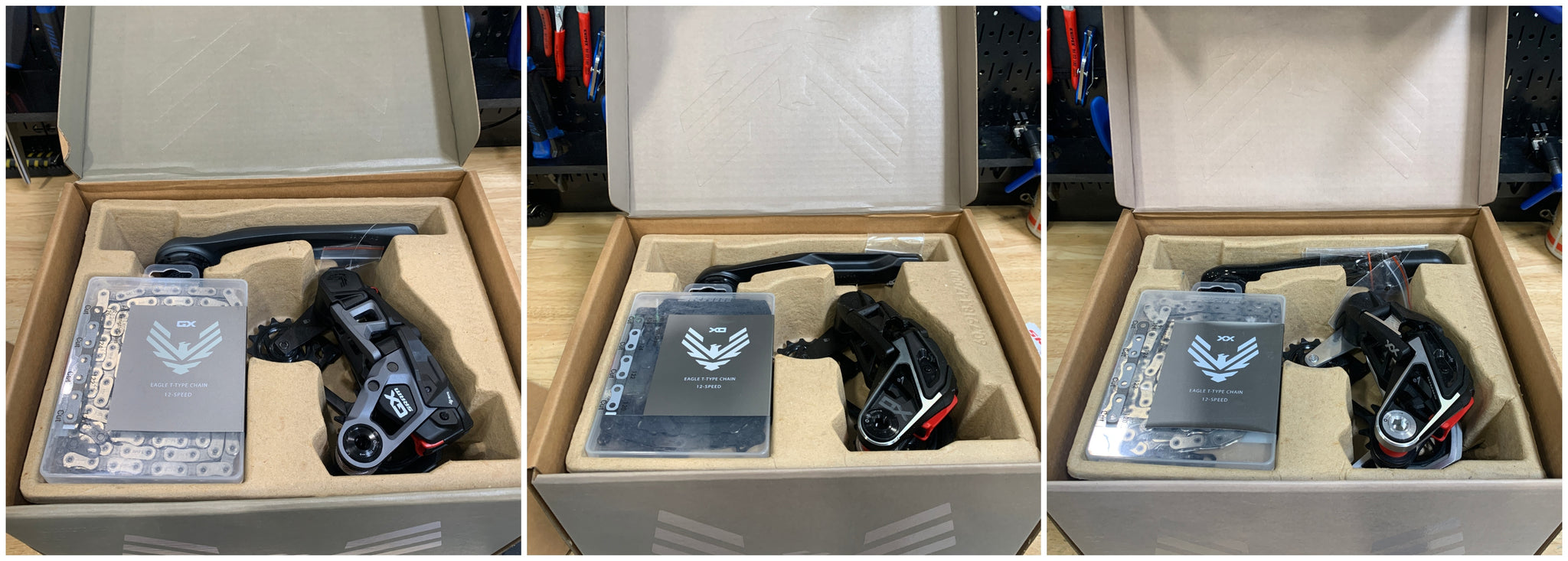
Here are the real-world SRAM Transmission weights I measured on our scale. These are the numbers that matter most if you are comparing GX, X0, and XX Transmission for an actual bike build.
| Component | GX Transmission | X0 Transmission | XX Transmission |
|---|---|---|---|
| Rear Derailleur, no battery | 464g | 448g | 439g |
| Crankset | 745g | 712g | 561g |
| Cassette | 446g | 380g | 382g |
| Chain | 287g | 287g | 277g |
| Controller | 47g | 47g | 47g |
| Battery | 26g | 26g | 26g |
| Total Real-World Weight | 2,015g | 1,900g | 1,732g |
| Current SRAM MSRP | $1,199 | $1,759 | $2,299–$2,499 |
Note: These are my real-world scale weights for complete non-power-meter AXS Transmission groups. SRAM MSRPs can change, and TPC sale pricing may differ from SRAM MSRP.
SRAM Transmission Price vs. Weight
The basic weight story is simple: GX is the heaviest, X0 saves a little weight, and XX saves a lot more weight thanks mostly to the carbon crankset.
Compared to GX, X0 saved 115 grams on my scale. Compared to X0, XX saved another 168 grams. Compared to GX, XX saved 283 grams total. That is noticeable on paper, but it is still less than the weight of a full water bottle. For many riders, GX’s extra weight will not matter much on the trail.
| Upgrade | Weight Saved | What You Mostly Pay For |
|---|---|---|
| GX to X0 | 115g | Nicer finish, lighter cassette, lighter derailleur, more refined alloy crank |
| X0 to XX | 168g | Carbon crankset, premium machining, XX chain, Magic Wheel derailleur pulley |
| GX to XX | 283g | Biggest weight drop, premium materials, top-tier finish |
According to SRAM, GX offers the same core shifting performance as the more expensive Transmission groups. It uses the same hangerless Full Mount concept, cassette mapping, AXS electronics, and T-Type shifting logic. In real use, if you were blindfolded and shifting through the gears, it would be very hard to tell GX, X0, and XX apart.
There are material and construction differences, but the biggest high-level differences most riders will notice are weight, finish, crank material, cassette construction, and price.
GX has a bead blast gray and black finish, X0 has a black finish, and XX has a black and machined silver finish. GX uses alloy cranks, X0 uses nicer machined alloy cranks, and XX uses carbon cranks.
[product-block handle="sram-gx-t-type-eagle-transmission-axs-groupset-rd-w-battery-charger-cord-ec-pod-fc-gx-q174-dub-mtb-wide-175-dark-polar-w-dm-32t-cr-w-2-guards-cn-126l-cs-xs-1275-10-52t"/]
[product-block handle="7441087627456-sram-x0-eagle-t-type-axs-transmission-groupset"/]
[product-block handle="7441087791296-sram-xx-t-type-eagle-transmission-axs-groupset"/]
SRAM GX vs. X0 vs. XX Transmission: Quick Comparison
| Group | Best For | Why Pick It? |
|---|---|---|
| GX Transmission | Most trail and enduro riders | Best value, same core shifting performance, revised battery position, durable parts, lowest price. |
| X0 Transmission | Riders who want the sweet spot | Cleaner finish, lighter cassette, lighter derailleur, nicer alloy crank, better looks without going full XX. |
| XX Transmission | Premium trail, enduro, and weight-focused builds | Carbon crankset, lowest weight of these three, premium machining, XX chain, Magic Wheel derailleur pulley. |
What About XX SL Transmission?
[product-block handle="7441087692992-sram-xxsl-t-type-eagle-transmission-axs-groupset"/]
You'll notice that the top-spec XX SL Transmission is mostly omitted from this GX vs. X0 vs. XX comparison. XX SL is designed specifically for XC racing, so the derailleur, cassette, crank arms, and chain are all more weight-focused. It uses more exotic construction and makes more compromises for race weight.
Here are the weights of a few XX SL components on my scale:
- XX SL Rear Derailleur: 414g
- XX SL Cassette: 347g
- XX SL Chain: 305g
The carbon crank is similar to XX, but it is a few grams lighter because the crank arms are hollow carbon and the chainring does not use integrated bashguards. It also comes with a 34t chainring instead of a 32t. There is also an option to purchase the XX SL group with a power meter.
[product-block handle="7441087725760-sram-xxsl-t-type-eagle-transmission-powermeter-axs-groupset"/]
I decided not to compare XX SL directly with XX, X0, and GX because it has a very different target audience. For pro racers or XC weight weenies with money to burn, XX SL is the best option. For everyone else — regular trail and enduro riders — it makes more sense to choose between GX, X0, and XX.
[button]Shop Transmissions[/button]
SRAM GX vs. X0 vs. XX Transmission: Rear Derailleurs
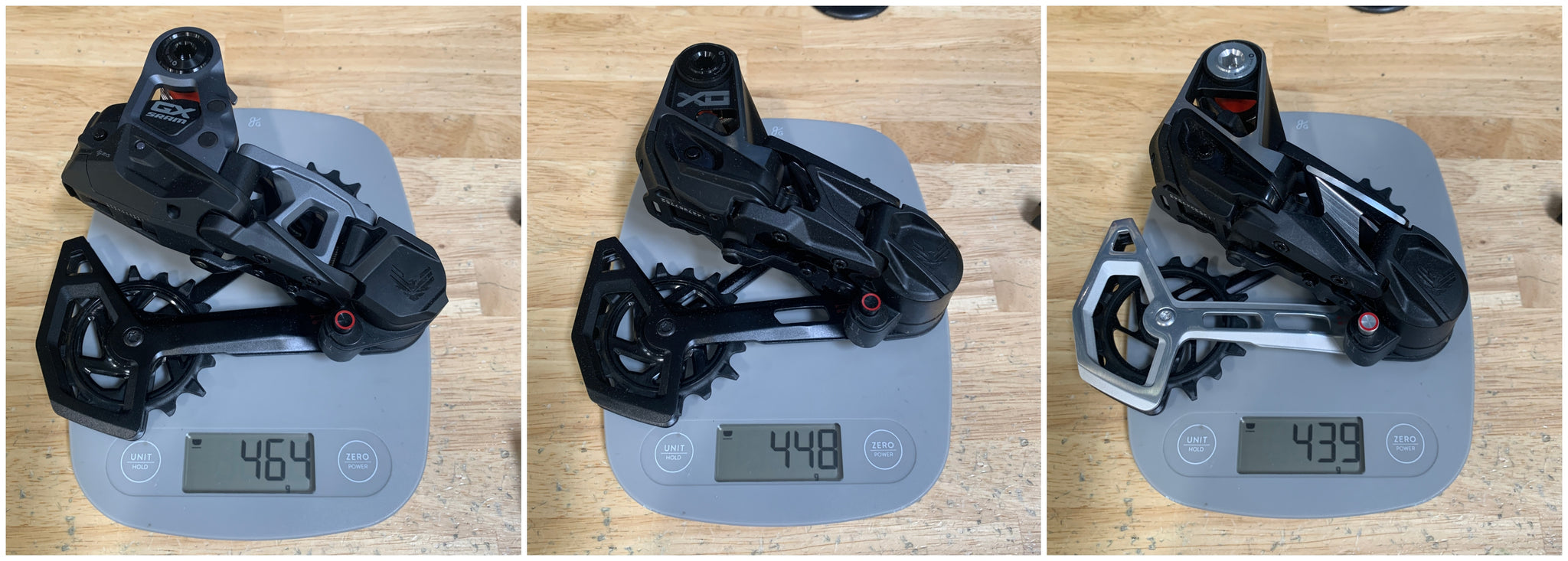 The centerpiece of SRAM’s Transmission design is the direct-mount rear derailleur. This derailleur mounts to any frame with a UDH, or Universal Derailleur Hanger. It replaces the hanger and clamps directly to the frame.
This adds a lot of stiffness to the system and improves shifting. It also means the derailleur actually touches the cassette, which ensures the derailleur alignment is consistent and eliminates the need for traditional limit and B-gap screws. SRAM also uses cassette mapping, so the derailleur times its shifts with the ramps on the cassette. The result is smooth shifting, even under full power.
The derailleurs are also built to be serviceable. Parts like the skid plates, b-knuckle, and pulley cage are replaceable if damaged, which is a big deal for mountain bikers who ride in rocks, roots, and bad ideas.
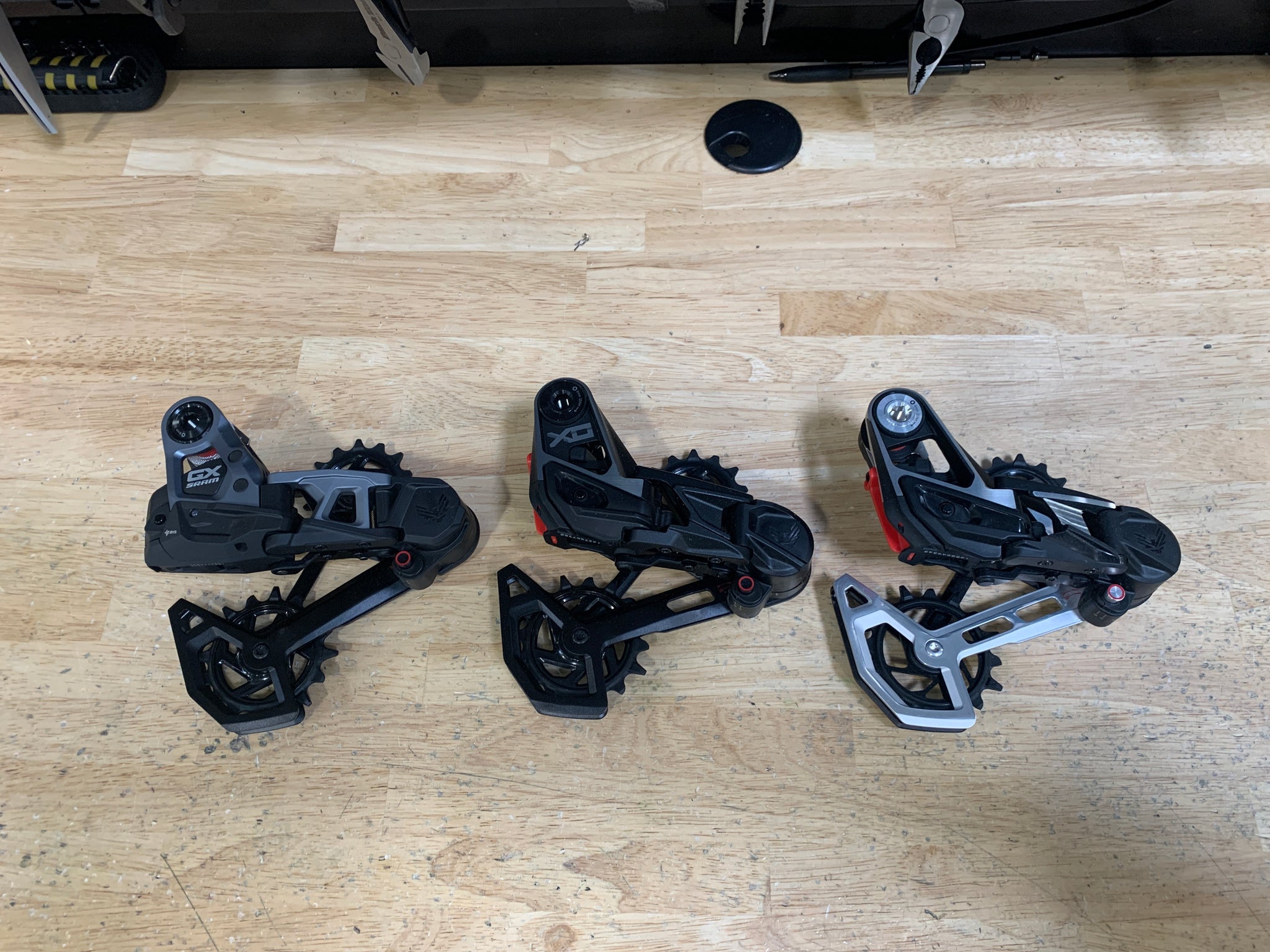 You can see the different finishes when looking at the three derailleurs side-by-side. It's hard to tell from the photo, but the XX rear derailleur also has the “Magic Wheel” lower pulley wheel. The outer teeth of the pulley wheel can spin independently of the main pulley wheel, so if a stick or foreign object lodges itself into the pulley wheel and jams it up, the Magic Wheel can keep the outer teeth spinning to help prevent damage. The X0 and GX derailleur can be upgraded with a Magic Wheel if you want.
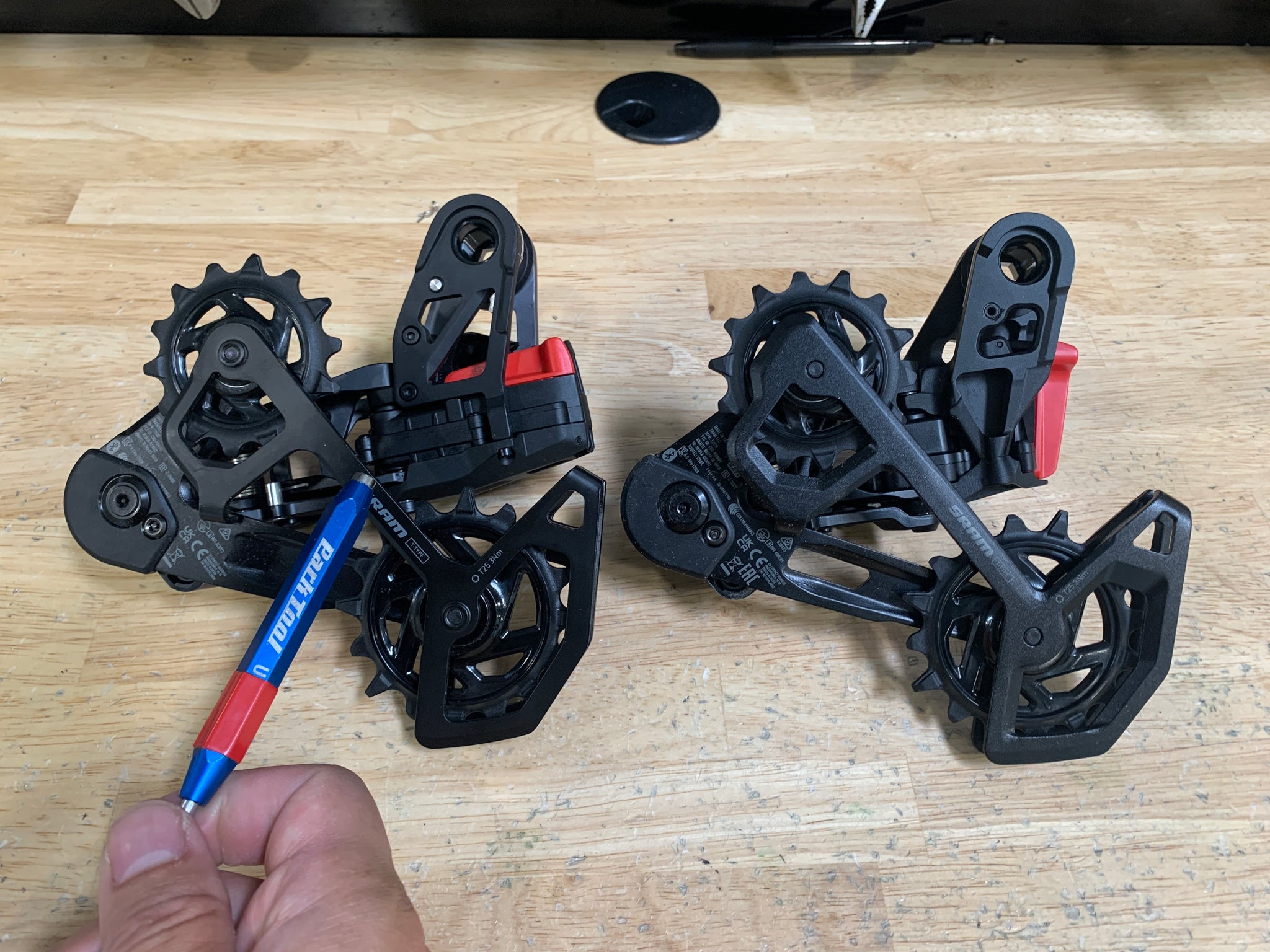 A big reason the GX Transmission derailleur weighs more than its X0 and XX counterparts is because it uses a steel inner pulley cage instead of an alloy cage. I confirmed this with a magnet.
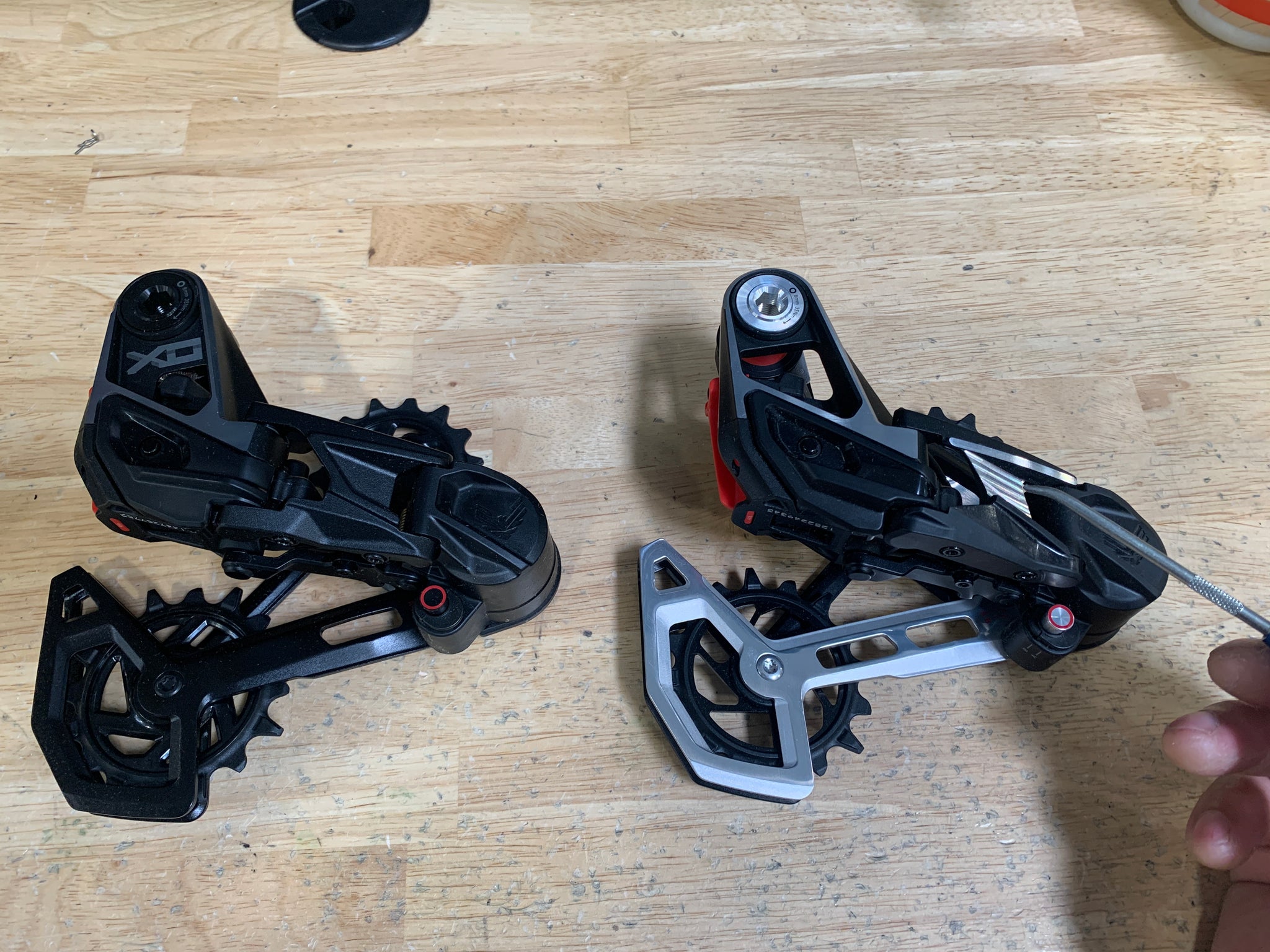 Comparing XX to X0, you can see how the XX derailleur reduces its weight. All the shiny silver bits visible on the skid plates and the derailleur body are where small amounts of extra material have been machined away. This literally shaves a few extra grams, but it also increases the cost because of the extra production time. I think it looks pretty cool too. The outer pulley cage is also silver instead of black, and it has more cut-outs and recesses where material has been removed.
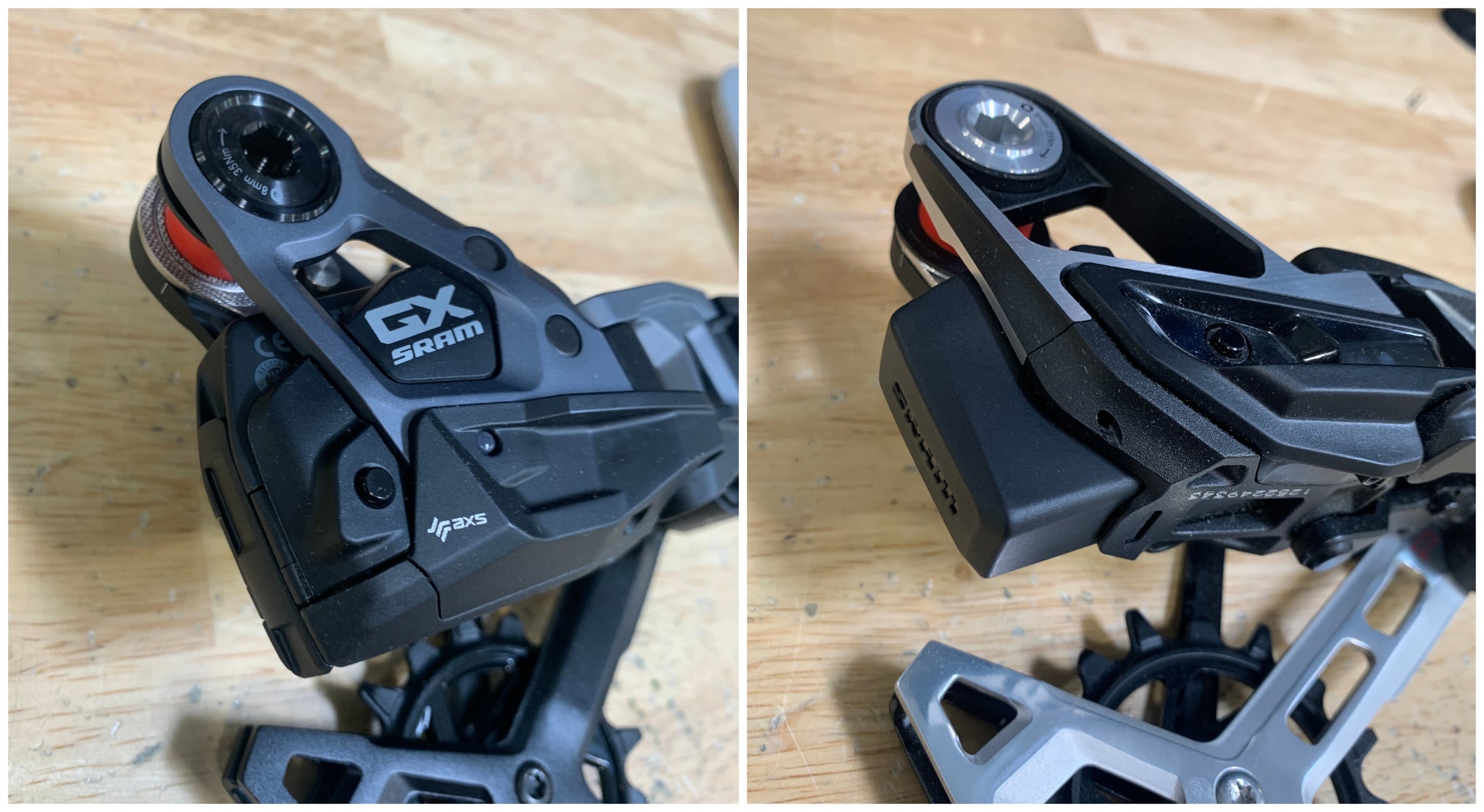 The GX derailleur has a revised battery position. It's tucked into the area between the direct-mount clamps, keeping it more protected. There are a few extreme cases where riders have ripped off the AXS battery in a bad crash. This isn't common, so I wouldn't be too worried, but if you ride lots of gnarly terrain, the GX derailleur might provide some extra peace of mind.
SRAM GX vs. X0 vs. XX Transmission: Cranksets
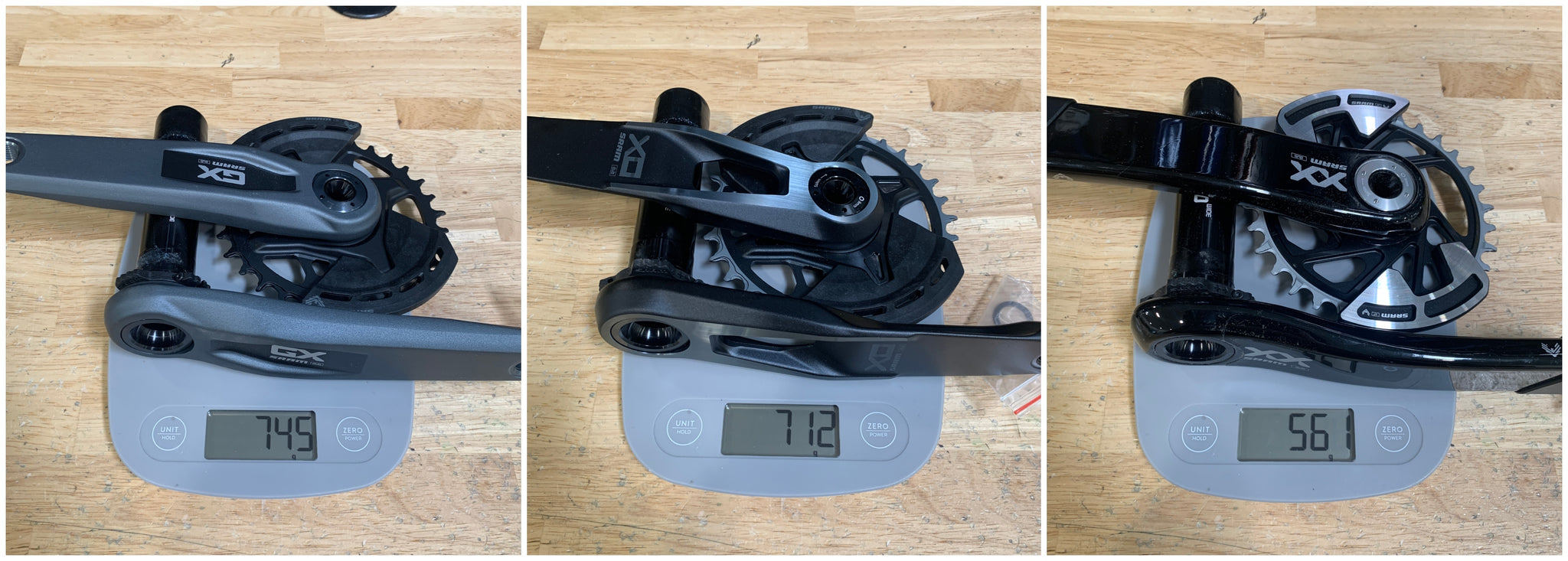 The crankset is where the biggest SRAM GX vs. X0 vs. XX Transmission weight difference shows up.
All three cranksets use DUB spindles, come with 32t 8-bolt direct-mount chainrings with integrated bashguards, and are available in 165mm, 170mm, and 175mm crank arm lengths. I weighed 170mm cranks for this comparison.
| Crankset | Material | Real-World Weight | Notes |
|---|---|---|---|
| GX Transmission | Alloy | 745g | Most affordable, heaviest, simple and durable. |
| X0 Transmission | Machined alloy | 712g | Lighter and more refined than GX, with extra machining. |
| XX Transmission | Carbon | 561g | Biggest weight savings of the three groups. |
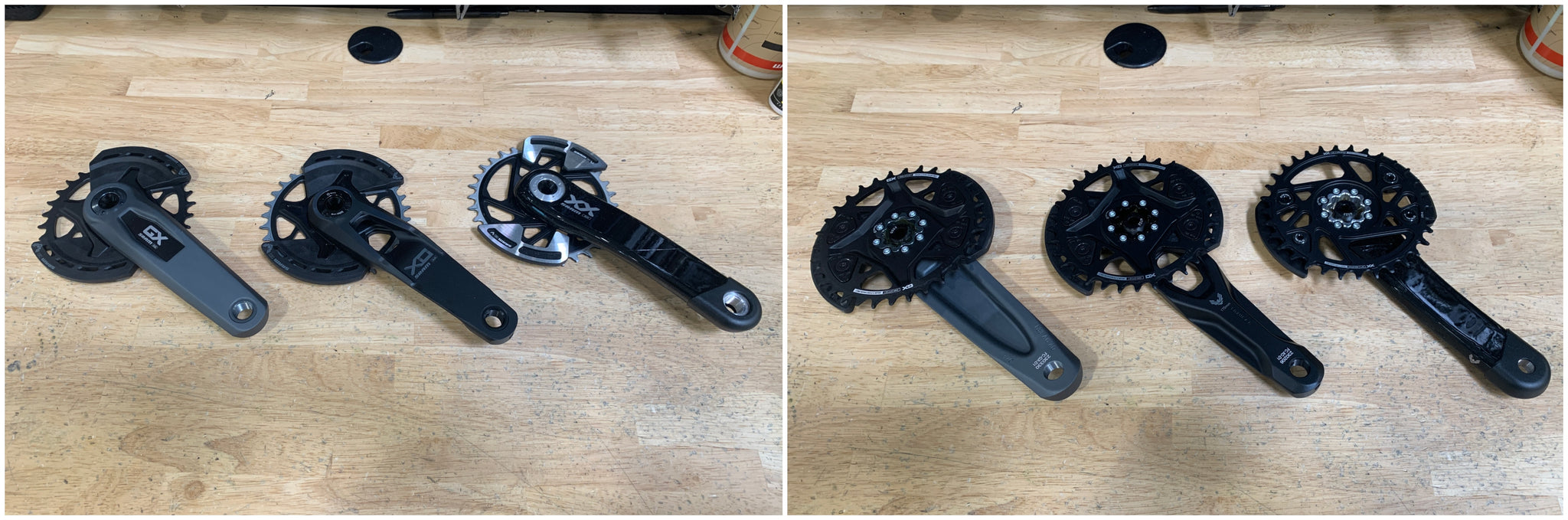 GX and X0 Transmission use alloy cranks, which weigh quite a bit more than the carbon cranks used on XX. The X0 crank has been more extensively machined than the GX crank and it features a cut-out that shaves around 30 grams. The integrated bashguards are all removable, but the XX bashguards have a machined finish that looks quite nice.
If you are searching for SRAM GX Transmission crankset weight, the big thing to know is that the crankset is one of the biggest contributors to GX’s total weight. If you want to make a GX Transmission build lighter, swapping to a carbon crank is one of the most obvious places to start.
SRAM GX vs. X0 vs. XX Transmission: Cassettes
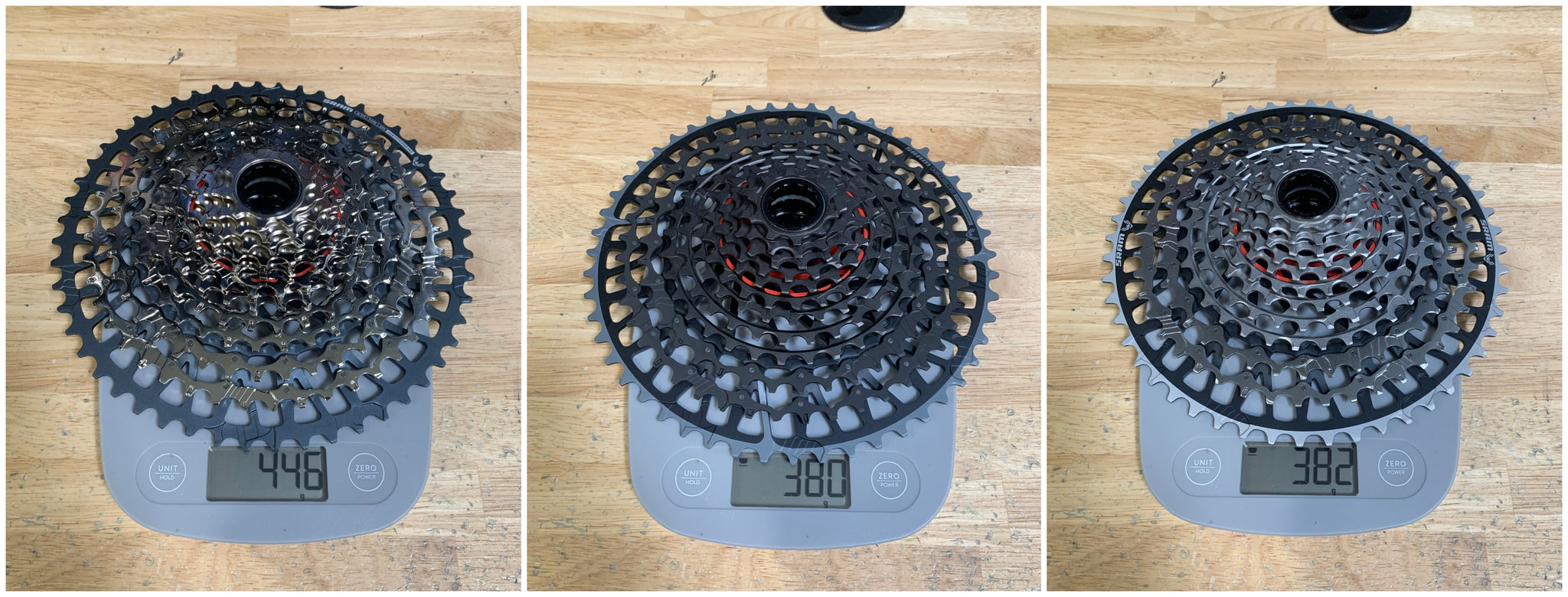 There is a meaningful weight difference between the XS-1275 cassette used on GX and the XS-1295 and XS-1297 cassettes used on X0 and XX.
| Cassette | Used On | Real-World Weight | Official SRAM Weight |
|---|---|---|---|
| XS-1275 | GX Transmission | 446g | 445g |
| XS-1295 | X0 Transmission | 380g | 385g |
| XS-1297 | XX Transmission | 382g | 385g |
The GX cassette has the same 10-52t range as the X0 and XX cassettes, but the construction is different. The GX XS-1275 cassette uses a PinDome design for gears 1-8 and a one-piece mini-cluster for gears 9-12. X0 and XX use a larger one-piece cluster for gears 4-12, with only the three largest cogs pinned. The use of more pins and individual cogs in the GX cassette increases weight but reduces cost.
Interestingly, the X0 and XX cassettes are supposed to be very close in weight. My XX cassette weighed 2 grams more than my X0 cassette, which is small enough for me to ignore. If I weighed a bunch of different X0 and XX cassettes, I would expect a few grams of variation.
Update: According to SRAM, the XX cassette uses stronger steel than X0 and has a harder, longer-lasting surface coating. Thanks to Kai Lindström for pointing that out in the comments.
SRAM GX vs. X0 vs. XX Transmission: Chain, Battery, and Controller
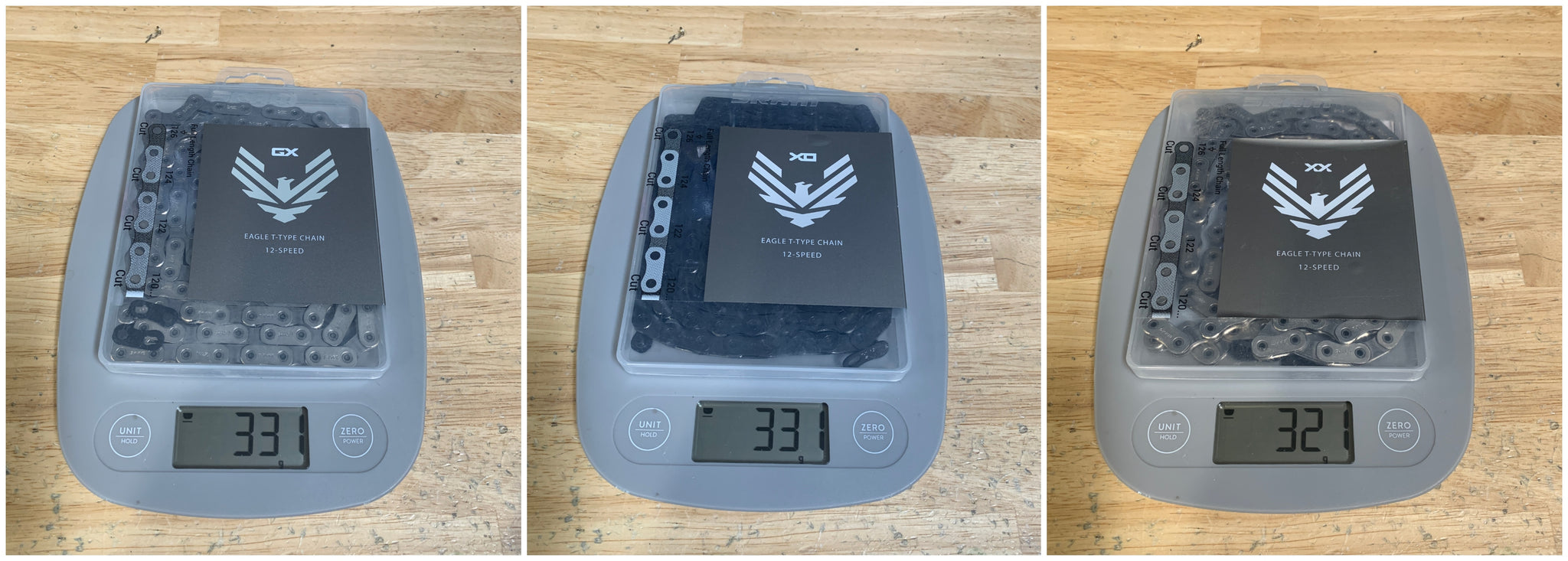 Note: Subtract 44 grams for chain packaging.
The only real weight difference between the chains is that the XX chain uses hollow pins, which saves 10 grams. It also uses a different surface treatment. Comparing the X0 and GX chains, I could not find any real difference beyond the finish and surface treatment. Black is cooler though, obviously.
You’ll notice that I weighed the chains in the packaging. We still had to sell these groups, so I didn’t want to cut the packaging open. I found some opened packaging, weighed it, and accounted for that in the main weight table.
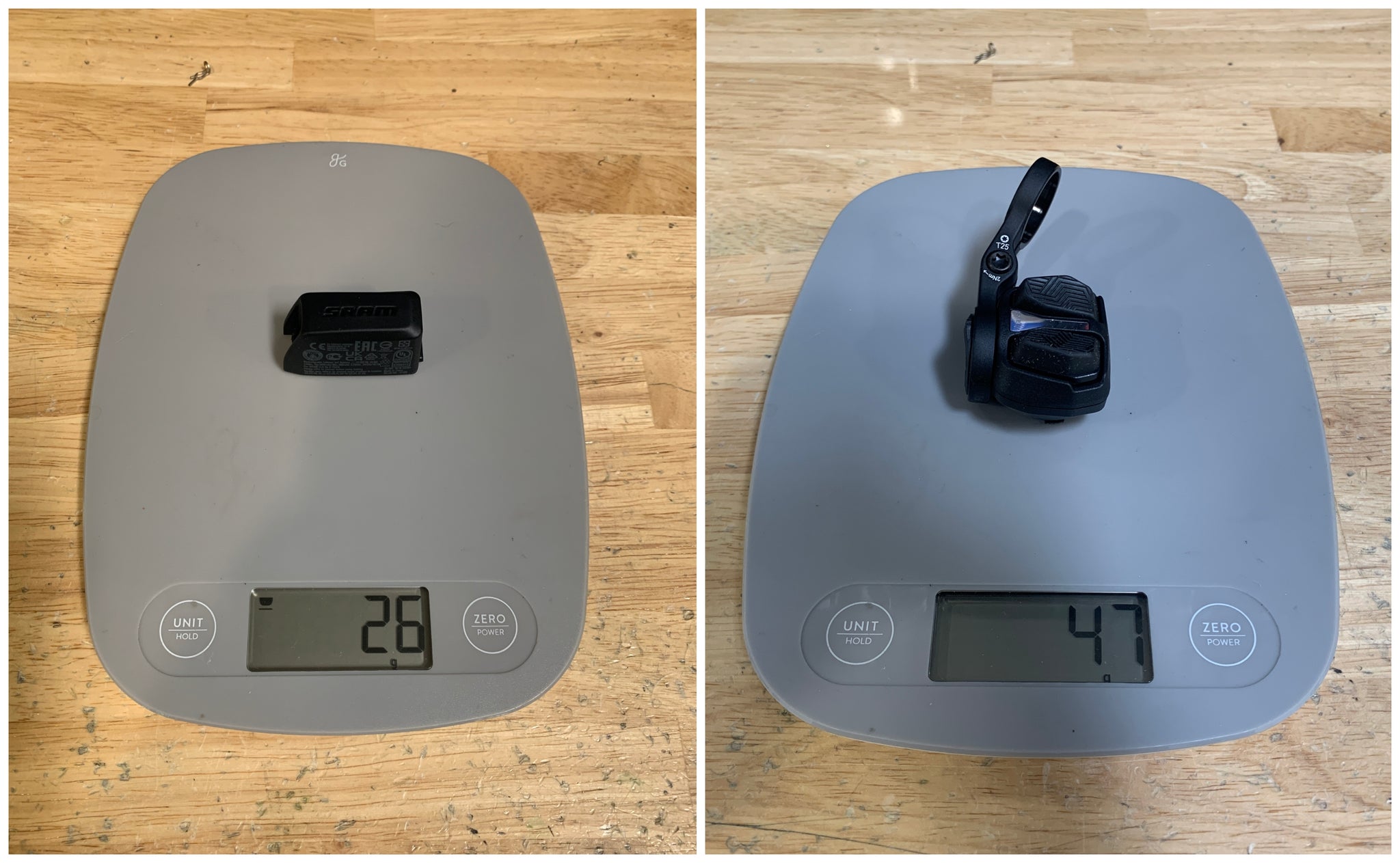 All three groups come with an AXS derailleur battery and a controller. They are all the same weight. No spicy take here. AXS batteries are AXS batteries, and the controller weight is basically a non-factor in the GX vs. X0 vs. XX decision.
What About Mechanical Eagle Transmission?
Since this article first published, SRAM has expanded Transmission beyond wireless AXS. The biggest new addition is mechanical Eagle Transmission, including Eagle 90 and Eagle 70. These groups still use the Full Mount hangerless concept, T-Type shifting, and Transmission cassettes, but they use mechanical shift cables instead of AXS wireless shifting.
That is important context for 2026 shoppers because “SRAM Transmission” no longer automatically means electronic AXS. If you want the lowest-cost way into T-Type Transmission shifting, mechanical Eagle 90 or Eagle 70 may be worth a look. If you want wireless shifting, battery-powered AXS performance, and the cleanest cockpit, GX, X0, XX, and XX SL AXS Transmission are still the groups to compare.